









Range extenders are enjoying a bit of a renaissance at the moment. Early examples like the Chevrolet Bolt and BMW i3 gave the world a preview of what these powertrains were capable of, but they largely fell out of favor in the middle of the last decade as carmakers shifted their focus to fully electric models.
Review: Before You Buy A Small SUV, Look At Kia’s 2026 K4 Turbo Hatch First
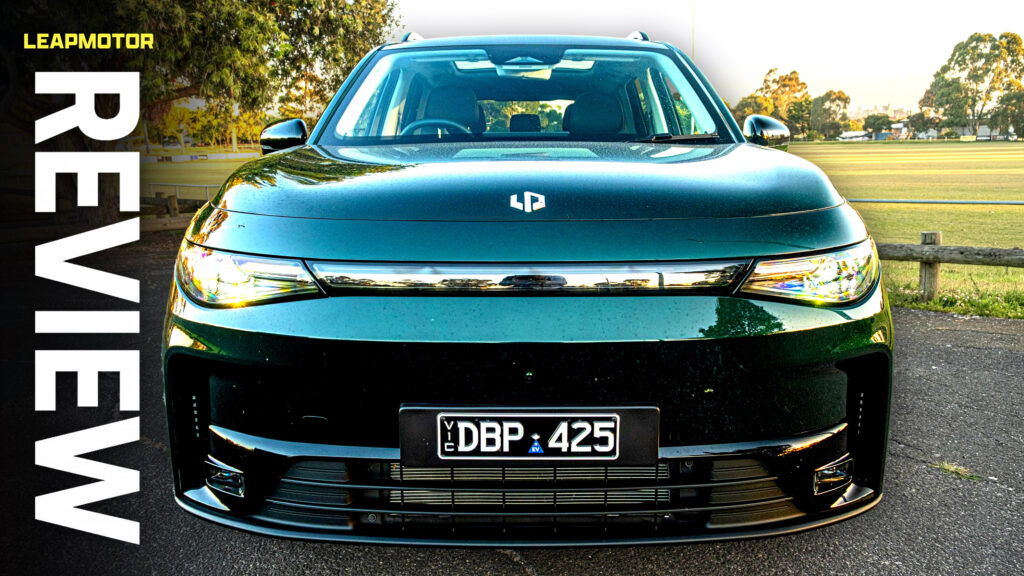
Things have changed. Thanks in large part to several major Chinese manufacturers, range-extender EVs are becoming more common and are even being adopted by legacy brands like Ford and Hyundai. Last year, Leapmotor, Stellantis’ Chinese partner brand, joined the movement by adding a range-extender option to its mid-size C10 SUV, and we had the chance to live with it over the Christmas period.
QUICK FACTS
SWIPE
In markets where charging infrastructure is still patchy and long-distance driving is simply part of life, the range-extender idea holds up. You get the smooth, instant response of an EV without planning your schedule around charging stops.
On paper, the C10 REEV arrives at the right moment, pitching itself as sensible rather than compromised. In reality, while the powertrain delivers on that promise, the experience is undercut by a collection of nagging tech issues that chip away at its appeal.
What Changes With The REEV?
Photos Brad Anderson/Carscoops
The first Leapmotor I tested last year was the regular C10 EV, equipped with a 69.9 kWh battery and a rear-mounted electric motor with 215 hp and 236 lb-ft (320 Nm). The C10 REEV is quite a bit different.
Review: I Drove Stellantis’ Chinese Electric SUV That Rivals Tesla For Just $30K
Under the hood sits a 1.5-liter four-cylinder that never drives the wheels, serving solely as a generator to charge the battery pack. That battery is a 28.4 kWh unit powering a rear-mounted electric motor rated at 158 kW (212 hp) and 320 Nm (236 lb-ft) of torque.
Leapmotor says the C10 REEV can travel up to 1,150 km (715 miles) between top-ups and charges, average 15.2 kWh/100 km in electric operation, and has a quoted fuel consumption of 0.9 l/100 km (261 US mpg).
Visually, there’s nothing differentiating the C10 REEV from the EV. That means it looks as uninspiring as the EV, with not even the slightest bit of personality.
How’s The Interior?
Photos Brad Anderson/Carscoops
In the cabin, it’s also very familiar. Leapmotor has done exactly what Tesla popularized with the Model 3 and Model Y, opting for an ultra-minimalist design that some people will love, but others will hate.
A 14.6-inch infotainment display sits at the center of the dash running on Leapmotor’s in-house operating system, which uses Android as its base. While we wouldn’t go as far as to describe the C10’s infotainment as good as Tesla’s, it’s surprisingly not far off.
The tablet-like design doesn’t require a steep learning curve to get used to, and the display is very responsive to the touch. Admittedly, some of the settings hidden in the menu are a little too comprehensive, and it can be difficult to find things while on the move. Fortunately, there is a swipe-down notification menu that can be configured with dozens of different toggles for important vehicle functions, ensuring they’re never more than a couple of touches away.
Photos Brad Anderson/Carscoops
Frustratingly, the display does not support smartphone mirroring, so there’s no Android Auto or Apple CarPlay, leaving me to place my phone in the cupholder for navigation. Additionally, the quality of the reversing camera is shocking and not up to modern standards. The infotainment system also needs 15 seconds to load after the car is turned on, by which time I’d often already reversed without the camera loading and started driving away.
All of the materials used feel pleasantly plush, particularly the soft-touch leather adorning the seats, door panels, dashboard, and center console. However, I found that the leather marked very easily, so while it looks nice, it doesn’t stay clean for very long.
Entering and exiting the C10 REEV also turned into a bigger hassle than it should have been. In the first C10 I tested, I easily synced my phone with it and used it as the key. When I tried to use the Leapmotor app on my phone to do the same with this C10, it refused to work. A bit of digging suggests this could have been because the VIN had already been assigned to another device. Apparently, resetting the infotainment system should have fixed it. It didn’t.
Do Small Annoyances Add Up?

This left me with no choice but to use the silly keycard for my two weeks with the C10 REEV. Not only is a keycard inferior to a traditional key in every single way, but it also doesn’t have any buttons, meaning I had to tap the NFC logo on the driver’s side mirror every time I wanted to lock or unlock it. It doesn’t even have a proximity locking/unlocking function, so when unloading things out of the passenger side or the trunk, I’d have to walk back around to the driver’s mirror and tap it.
I get it, keycards are in fashion (thanks, Tesla…), but they are just not nice to use.
My issues didn’t stop here. The air conditioning is genuinely disappointing. With the temperature turned down to its lowest setting, the AC on, and the fan speed at full, the C10 would only blow out mildly cool air, equivalent to what most cars do with the AC turned off and just the fans running. In the Australian summer, that was very annoying.
Set those issues aside, and the cabin of the C10 REEV is a nice place to spend time. It’s spacious, and there’s plenty of room in the rear, too. Cargo space is also good, as it can swallow up to 546 liters (19.2 cubic feet) or 1,375 liters (48.5 cubic-feet) with the rear seats folded down.
Smooth Power
Photos Brad Anderson/Carscoops
Out on the open road, I quickly grew quite fond of the range-extender powertrain, and actually preferred it to the more traditional full-EV version.
As the engine is only ever operating in the background to charge the battery, it doesn’t intrude on the driving experience at all. In fact, even when I had the Leapmotor in the mode that prioritizes the engine charging the battery, the four-cylinder barely ever revved to beyond 2,000 rpm, so it couldn’t be heard. Around town, it’ll happily sit at less than 1,200 rpm, remaining completely silent while the instant power and torque of the rear-mounted electric motor make the REEV drive just as smoothly as an EV.
I ended my two weeks with the C10 REEV averaging 14.5 kWh/100 km, while fuel consumption sat at 6.1 l/100 km (38.5 US mpg).
On The Road

Admittedly, the Leapmotor isn’t particularly fun or engaging to drive. It takes 8.5 seconds to reach 100 km/h (62 mph) and isn’t the type of SUV that likes to be driven in a sporty manner. Drive it calmy, and it does the job just fine.
As I found in my first test of the all-electric C10, the driver assistance systems leave a lot to be desired. The SUV includes both adaptive cruise control and active lane centering, neither of which works well. Even if the adaptive cruise is set and the C10 detects a vehicle ahead, it’ll struggle to maintain a consistent distance from it, repeatedly accelerating and decelerating to hold position.
The lane centering also needs improvement. I spent hours on end sitting on well-marked highways during my time with the Leapmotor, and it’d consistently ping-pong between the lines. That’s unacceptable in this day and age.

The C10 REEV also has several other overactive sensors, like the driver attention monitoring system and speed limit warnings. Fortunately, these can be easily disabled in the swipe-down menu, and I didn’t find them to be as intrusive as I did when I first tested the C10 six months ago.
Ride quality is good most of the time, but there were a few instances when it felt like I hit the bump stops after going over speed bumps a little too fast, which most cars would have easily dealt with. The steering is exceptionally light, particularly in the Comfort setting, but it can be configured to feel slightly firmer in Sport mode.
Verdict
Photos Brad Anderson/Carscoops
The Leapmotor C10 REEV has promise. The trick hybrid powertrain works well, combining all of the benefits of a traditional EV like smoothness and instant power, without any of the downsides like range anxiety, particularly in Australia, where the charging network is sub-par.
However, the overall experience of living with the C10 is marred by poorly calibrated safety systems and some tech gremlins that need to be fixed. If these systems can be improved with software updates, the C10 REEV would be a very tempting proposition.